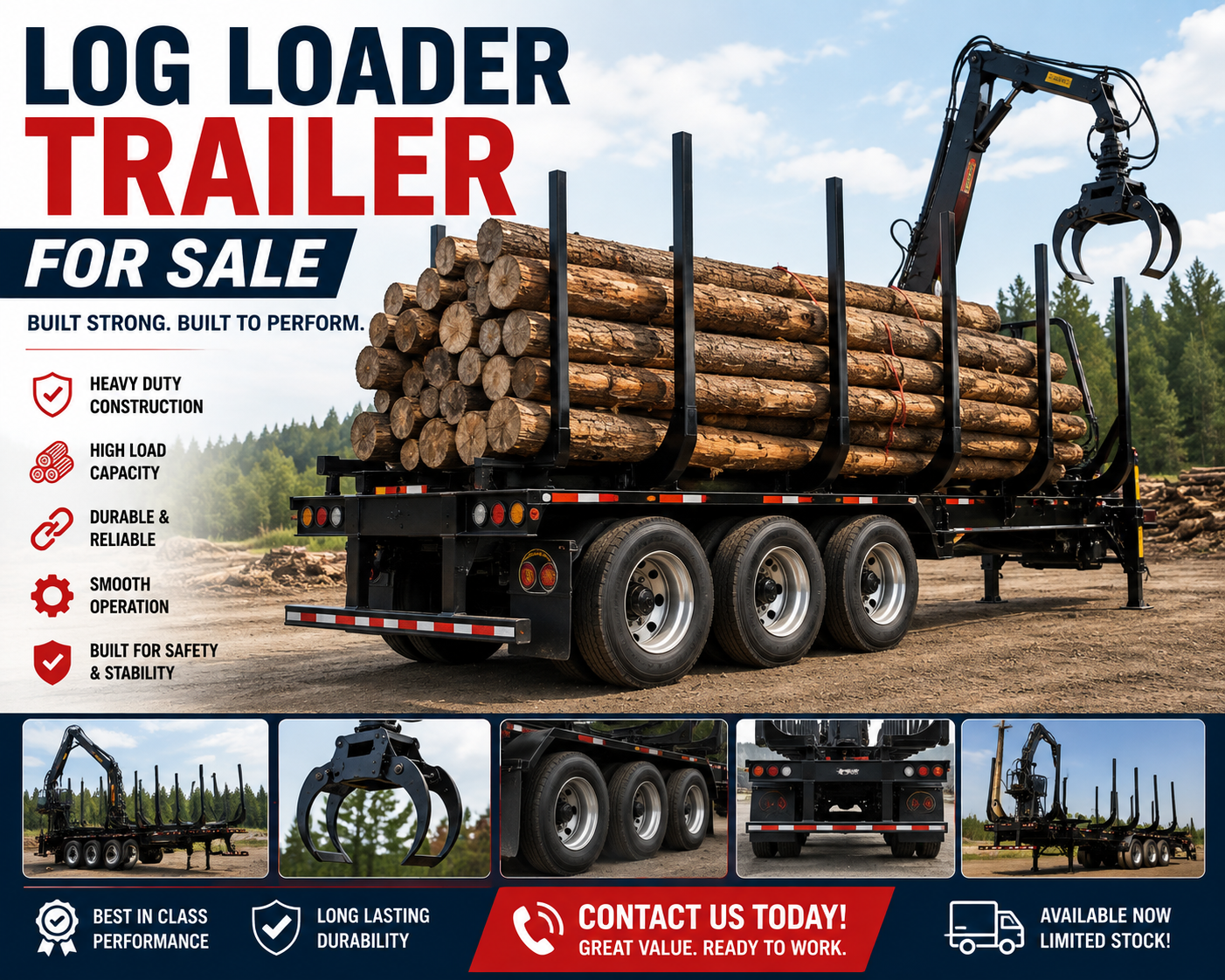
Moving timber safely and efficiently requires equipment designed for the weight, shape, and unpredictable nature of logs. A log trailer provides a practical way to collect and transport timber while reducing unnecessary manual handling. Whether the work involves woodland management, property maintenance, firewood preparation, or regular forestry tasks, the right trailer can make daily operations smoother. Before choosing one, however, it is important to consider carrying capacity, terrain, loading methods, construction, maneuverability, and safety.
Why a Log Trailer Is Useful
Transporting logs with equipment not intended for forestry work can create problems. Timber can roll, shift, or extend beyond the loading area, making secure handling difficult. Purpose-built hauling equipment helps keep loads organized while providing appropriate support during transportation.
A log trailer is particularly useful when timber needs to move from cutting areas to processing, stacking, or storage locations. Rather than handling individual logs repeatedly, operators can consolidate material into manageable loads.
This approach can reduce travel between locations and improve the overall flow of forestry work.
Consider the Type of Timber You Handle
Not every forestry operation works with identical material. Some people regularly transport smaller logs, while others deal with longer and heavier timber.
Before selecting a log trailer, examine the diameter, length, and approximate weight of the logs you commonly move. The trailer should comfortably accommodate everyday timber rather than being selected only around occasional oversized material.
Matching the equipment to typical working conditions can improve stability and simplify loading.
Evaluate Load Capacity Carefully
Load capacity is one of the most important considerations. Carrying more weight than equipment is designed to handle can increase stress on structural components and negatively affect handling.
At the same time, choosing excessive capacity may result in equipment that is unnecessarily large for the available towing vehicle or working area.
A suitable log trailer should provide enough capacity for practical loads while remaining compatible with the equipment used to tow it. Balanced capacity often creates a more efficient setup than simply choosing the largest available option.
Think About Weight Distribution
How logs are positioned matters almost as much as total load weight. Poor distribution can affect stability, steering, and traction.
Operators should load timber evenly whenever possible and avoid concentrating excessive weight in one area. Understanding how a log trailer behaves when empty, partially loaded, and fully loaded can help improve control in changing terrain.
Secure loading practices are particularly important when traveling over uneven ground.
Match the Trailer to the Terrain
Forestry work rarely takes place on perfectly level surfaces. Mud, slopes, roots, loose soil, narrow tracks, and uneven woodland ground can all influence equipment performance.
When choosing a log trailer, consider where it will spend most of its working time. Ground clearance, wheel arrangement, overall width, and maneuverability can become important when navigating restricted areas.
Equipment suitable for open spaces may not necessarily perform as conveniently between closely spaced trees or along narrow access routes.
Maneuverability Can Improve Productivity
A trailer that is difficult to position may add unnecessary time to every loading cycle. Turning ability becomes especially important in forests where reversing space is limited.
Compact dimensions can improve accessibility, but capacity still needs to match the workload. The best balance depends on the environment in which the equipment will operate.
Planning routes before loading can also prevent avoidable repositioning.
Consider How Logs Will Be Loaded
Loading method plays a major role in overall productivity. Timber may be loaded manually in smaller operations or handled mechanically when logs are larger and heavier.
Before choosing a log trailer, consider how material will move from the ground onto the trailer. The loading system should match the timber dimensions and expected working pace.
Reducing repeated lifting and repositioning can save considerable effort during longer working sessions.
Organize the Loading Area
Efficient timber handling starts before the first log reaches the trailer. Creating a clear loading zone makes it easier to position equipment and organize timber.
Whenever possible, arrange logs so they can be reached without excessive movement. Keeping pathways free of branches, debris, and unnecessary obstacles can also improve safety.
Examine Construction and Durability
Forestry equipment works in demanding environments. Repeated loads, rough ground, moisture, debris, and changing weather conditions can place significant stress on components.
Inspect the frame, supports, connections, axles, wheels, and other high-load areas when assessing a log trailer. Construction should suit the expected workload and operating environment.
Regular inspection is equally important after equipment enters service. Small problems are generally easier to address before they become serious failures.
Maintenance Supports Reliable Operation
Routine maintenance can extend working life and reduce unexpected interruptions. Tires or wheels, bearings, fasteners, structural joints, and moving components should receive appropriate attention.
Cleaning accumulated mud, bark, and debris also makes inspections easier. A clean log trailer allows operators to notice unusual wear, damage, or loose components more quickly.
Maintenance frequency should reflect how heavily the equipment is used and the conditions in which it operates.
Make Safe Transport a Priority
Timber can move unexpectedly if it is loaded or secured incorrectly. Operators should follow appropriate loading and securing practices every time the equipment is used.
Avoid overloading and ensure logs remain properly contained during movement. Speed should suit the terrain, load, visibility, and available stopping distance.
Extra caution is needed on slopes and uneven surfaces because the behavior of a loaded log trailer can differ significantly from an empty one.
Choose Equipment Around Real Working Conditions
Selecting a best log trailer becomes easier when the decision starts with practical requirements. Consider the timber you normally handle, expected load size, towing equipment, terrain, loading method, maneuvering space, and maintenance routine. Rather than focusing on one specification, look at how the complete setup will function throughout a typical working day. A well-matched trailer can reduce unnecessary handling, organize timber movement, and support safer, more efficient forestry operations.