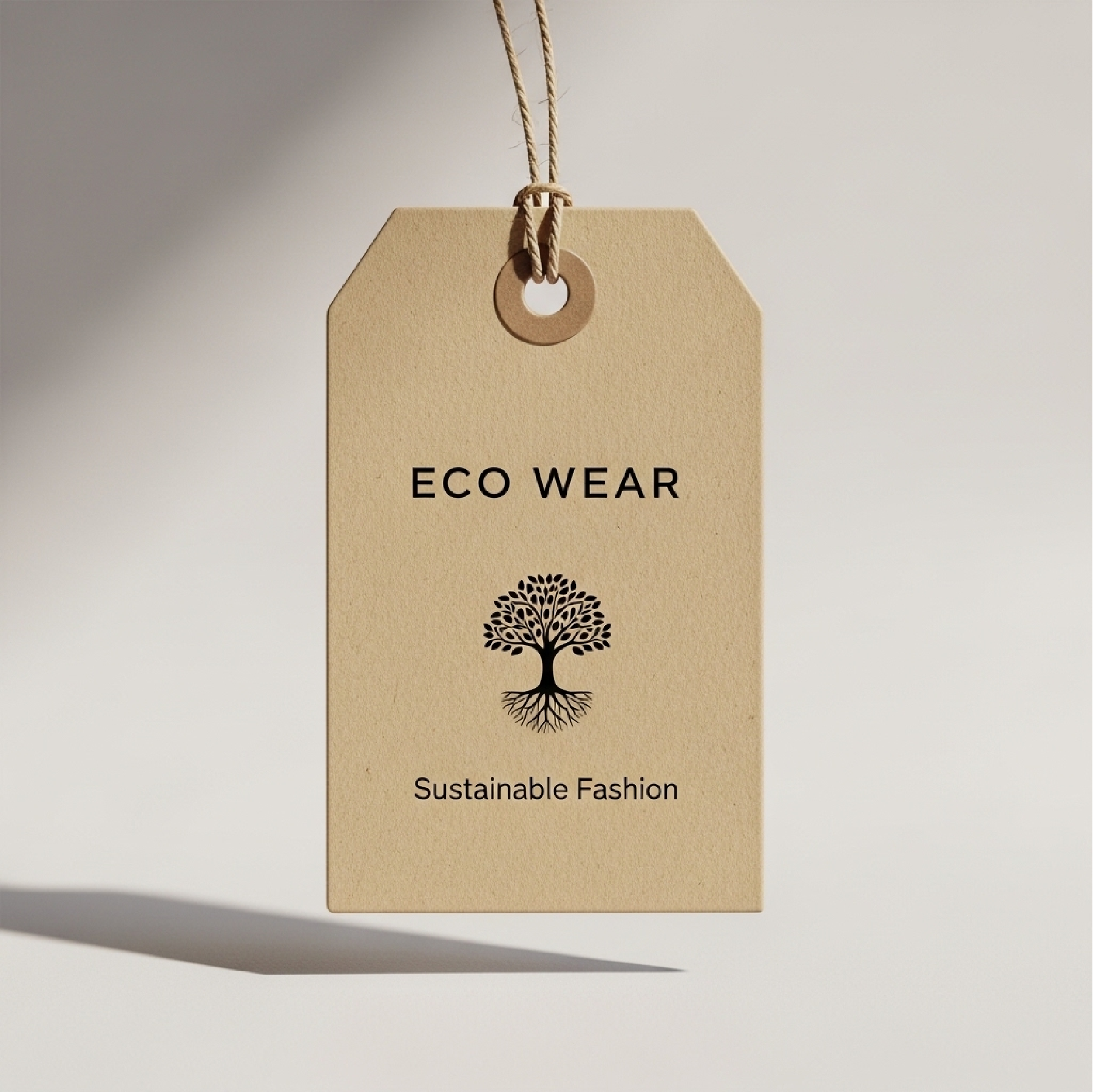
Retail stores often use paper tags to share important product details with shoppers who walk down the aisle. These mini cards are fastened to the merchandise on strings or by use of plastic fasteners so individuals can know the prices or the kind of material without having to go to a clerk to assist them in getting the information.
Customers will look at these labels to know the price of an item or how to maintain it after the purchase. Business owners like these markers since it is a cheap method to provide details of branding in a clean and effective way. Any retail setting will be enhanced by adding labels to goods since the availability of information will enhance the whole experience of shopping.
Brand Identity Display
Retailers print logos on little cards to ensure that buyers do not forget company names as they walk out of the store. Custom paper tags with logo simple fonts printed on cardstock and distinct colors can help create an appreciation among individuals who read the crowded shelves of a shop on a regular basis.
Clear visualization creates confidence among the buyers and sellers since they give attention to professionalism in the information presented and demonstrates commitment to having quality content. Small business owners also discover that unaffiliated and uniform branding on merchandise labels will help create a memorable identity in the competitive markets without huge advertisement budgets.
Pricing And Information
Displayed merchandise numbers eliminate the confusion of decimal numbers at the checkout counters during busy times in retail stores. Customers like that they can know the cost right away without having to walk around and find scanners or have to ask attendants for assistance. To make effective purchasing decisions, extra information such as size or materials used can also be found on such cards.
Proper pricing boards save time in the flow of transactions and maintain the flow of lines smoothly on both sides: cashiers and customers. The retail personnel also do not have to take much time to respond to simple questions when they execute them on the attached card that presents their features and the price of a given item.
Material Quality Choices
The choice of cardstock will determine the longevity of a merchandise marker in the presence of curious shoppers who will repeatedly touch it. The paper stock is heavy and is difficult to bend and tear compared to thin ones used for shipping and displaying.
Finishes with matte products minimize glare in stores where bright lights are used, and text is easily readable at several angles. A slight touch created by textured surfaces can make it special and unique to the buyers when it comes to handling merchandise. Using durable materials will make labels remain intact and legible until the final sale on the retail floor.
Attachment Methods
Label fastening systems ensure that merchandise labels are properly fixed as merchandise moves in a series from warehouses to display racks and later to shopping bags. Twine and cotton strings provide a vintage rustic look that would be a brilliant fit with Atelier crafts and artworks.
High-volume retail operations with emphasis on speed in inventory preparation rely on plastic fasteners to speed up the attaching process. Punched holes are reinforced with metal eyelets to avoid being torn through by strings of cardstock when handled roughly by customers. The right fastener will provide security in keeping the markers firm during the whole retail journey until the consumer takes them off.
Sustainable Retail Options
Eco-friendly paper options are popular among contemporary shoppers who are concerned with environmental sustainability in their consumption. Recycled cardstock decreases the amount of waste and indicates a commitment to brand responsibility in safeguarding natural resources to leave an imprint on future generations.
Inks made of plants on biodegradable products guarantee that the labels that are disposed of have very few effects on the local ecosystems. When shopping, they tend to buy brands that apply sustainable elements of packaging and stick with them in the course of the long term.
Creative Design Elements
Special forms and individual folds contribute to visual differentiation of merchandise amid stacks of other competing products. Small notes with wide spacing to symbolize a minimalist design give a luxurious appeal to high-end retail customers. Straight edges or ornate corners help to attract immediate attention to the indispensable information such as prices or brand names.
Considerate writing choices help to make the standard labels mini-sized artworks that can beautify the entire appearance of the goods. Companies dedicate their time to developing appealing images since the first impression has bottom weight on whether or not a browser turns out to be a consumer.
Information Organization
Intelligent layout planning is one that ensures the reader can take the time required to locate things they need, and the text is not too overcrowded. Setting prices towards the top attracts immediate attention, and instructions on care are placed in a comfortable position below the price. Custom tags UK creation of hierarchy in visual structure with the help of variations in font sizes is essential to highlight key points among secondary details.
The ability to read the lines without any hassles is characterized by spacing between the lines that is clean enough to allow any person of any age to read through the retail aisles. Good structure of text expresses the professionalism and consideration of time of busy shoppers to get certain facts about merchandise.
Conclusion
Small merchandise markers are important in linking buyers to items they require in their daily lives. Retailers use paper tags to convey price and branding information easily without the risk of confusion.
Selecting durable materials and hygienic patterns also ensures that products always appear their best on display shelves. Easy labeling solutions are always a classical additive of prosperous products in the retail business all over the world.