Field technicians make important decisions throughout the working day. They review assignments, assess customer situations, document completed work, respond to schedule changes, and determine what information needs to reach the office. Their ability to make those decisions efficiently depends heavily on having accurate information available when they need it.
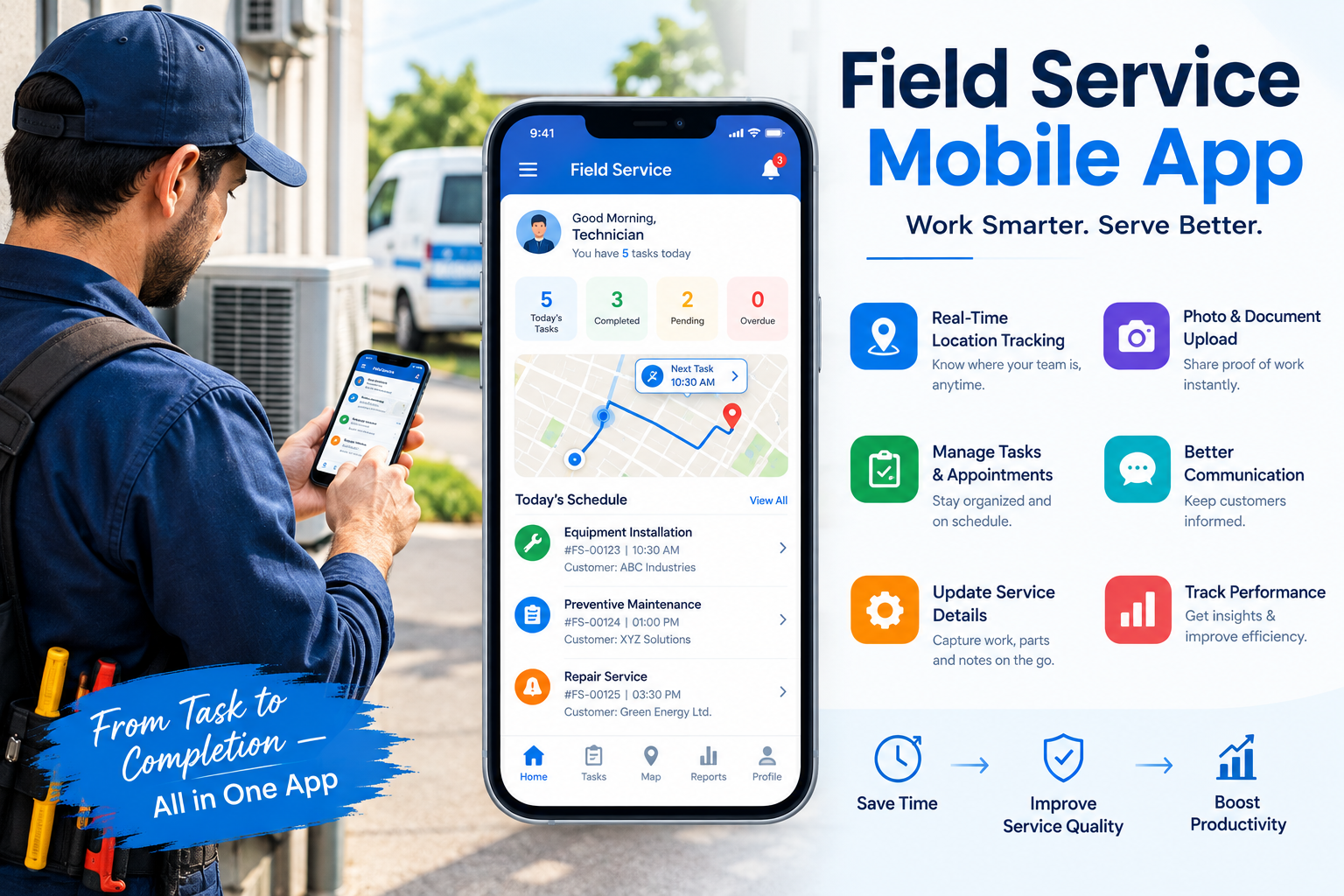
A field service mobile app can give technicians more convenient access to job details and operational updates while they are away from the office. Instead of relying primarily on printed documents, memory, or repeated calls to dispatchers, field employees can work with information that travels with them.
Better access to information can support faster decisions, clearer communication, more consistent documentation, and greater technician independence.
Field Decisions Depend on Reliable Information
Technical expertise remains essential in field service, but even highly experienced technicians can lose time when they lack basic information.
An employee may arrive at a location without complete job details, discover that instructions have changed, or need additional context about the customer’s request.
A field service mobile app can help make relevant information easier to access throughout the working day.
Start With a Clearer Understanding of the Assignment
Technicians can make better decisions when they understand why they are visiting a customer before arriving.
Reviewing available job details can help employees anticipate requirements and identify information that may need clarification.
This preparation creates a stronger starting point for the appointment.
Respond More Confidently to Schedule Changes
Field schedules can change quickly.
An urgent assignment might be added, an appointment may be cancelled, or dispatchers may reorganize workloads because another technician becomes unavailable.
When changes are communicated through scattered calls and messages, technicians may struggle to determine which information is current.
A field service mobile app can provide a more consistent way to access updated assignment details.
Reduce Uncertainty Between Appointments
Technicians should not have to wonder where they are expected to go next.
Clear access to current scheduling information helps employees transition between assignments more efficiently.
It can also reduce the need for routine confirmation calls, allowing dispatchers to concentrate on managing broader operational priorities.
Access Job Details at the Point of Work
Field employees often need information while standing directly at the customer location.
Returning to a vehicle to search through paperwork or contacting the office for routine details can interrupt the workflow.
A field service mobile app keeps important job information closer to where the work is happening.
Spend Less Time Searching for Answers
Information scattered across different documents or messages can slow down even straightforward assignments.
When relevant details are organized within a consistent mobile workflow, technicians can find what they need more efficiently.
Faster information access allows employees to spend more of their working time addressing the actual customer requirement.
Improve Field Documentation
Technicians generate valuable information during every appointment.
They may need to record observations, describe completed activities, update job status, or document outcomes.
If employees wait until much later to record this information, important details may be forgotten.
A field service mobile app can help technicians capture information closer to the moment the work occurs.
Create More Accurate Records
Immediate documentation reduces dependence on memory.
Technicians can record relevant information while the assignment is still fresh, improving the consistency of field records.
Better documentation also gives office employees clearer information when they need to review completed work.
Reduce Duplicate Administrative Tasks
Manual field processes often require information to be handled several times.
A technician may write notes on paper, submit those notes to the office, and then have someone transfer the same information into another record.
This creates additional work without improving the underlying service.
A field service mobile app can support a more direct digital workflow.
Free More Time for Productive Activities
Reducing repetitive administration can create meaningful time savings across a field workforce.
Even a few minutes saved on every appointment can become significant when multiplied across many technicians and daily jobs.
Technicians can focus more attention on customer-facing activities instead of repeatedly entering or transferring the same information.
Support Technician Independence
Field employees cannot work efficiently if every routine decision requires assistance from the office.
Technicians need enough information to handle standard assignments independently while still having access to support when unusual situations arise.
A field service mobile app can provide the operational context needed for greater independence.
Use Communication Where It Adds Value
Phone calls remain important when technicians encounter complex situations.
However, calls should ideally focus on genuine problems rather than basic questions about addresses, schedules, or routine job details.
Making standard information accessible helps create a more efficient relationship between technicians and dispatchers.
Improve Office Visibility Into Field Activity
Information access should work in both directions.
Technicians need updates from the office, while dispatchers and managers need to understand what is happening in the field.
Without timely job updates, office employees may need to interrupt technicians repeatedly.
A field service mobile app can support more consistent communication of field activity.
Help Dispatchers Make Faster Decisions
Knowing the status of assignments can influence scheduling decisions.
If one technician encounters a significant delay, dispatchers may need to reorganize later appointments. If another finishes earlier than expected, additional capacity may become available.
More timely field information gives planners greater context for these decisions.
Create More Consistent Working Practices
Technicians naturally develop personal ways of organizing their work.
While individual judgment is valuable, excessive variation in administrative processes can create inconsistent records.
A field service mobile app can help establish a common workflow for receiving, managing, and documenting assignments.
Make Routine Steps Easier to Follow
Structured processes can guide technicians through important administrative requirements without restricting how they solve technical problems.
Employees can follow consistent steps for reviewing information and recording job outcomes.
This can be especially useful when organizations manage large or geographically distributed teams.
Strengthen Customer Interactions
Customers expect technicians to arrive prepared.
When employees repeatedly ask for information that has already been provided or spend excessive time contacting the office, the service experience can feel disconnected.
Mobile access can help technicians begin appointments with greater context.
Demonstrate Better Preparation
Understanding the customer’s request before beginning creates a more organized interaction.
Technicians can focus on the work rather than trying to reconstruct basic information after arrival.
Better preparation can improve both efficiency and customer confidence in the service process.
Help New Technicians Adapt Faster
New field employees must learn more than technical procedures.
They also need to understand schedules, job information, documentation requirements, and communication processes.
A consistent mobile workflow can make these operational responsibilities easier to understand.
Reduce Dependence on Informal Knowledge
Experienced technicians often know how to navigate internal processes because they have learned them over time.
New employees do not have that background.
A field service mobile app can provide a clearer operational structure, helping new technicians understand how information flows throughout the working day.
Use Field Information to Improve Future Decisions
Every completed assignment provides information that can help organizations understand field performance.
Managers can examine job durations, recurring delays, workload patterns, and other operational trends.
Consistent field documentation makes these observations more reliable.
Turn Daily Activity Into Useful Insight
When technicians capture information through a structured process, managers gain a clearer picture of how work actually happens.
These insights can reveal opportunities to improve scheduling assumptions, field workflows, or technician preparation.
In this way, mobile access supports decisions not only during today’s assignments but also during future operational planning.
Conclusion
Field technicians make decisions in environments where quick access to accurate information matters. Missing details, outdated schedules, repetitive paperwork, and unnecessary calls can all slow down otherwise productive employees.
A field service mobile app can bring job information, schedule updates, and documentation tools closer to the point where service happens. This can help technicians work more independently, communicate more effectively, and record field activity with greater consistency.
The greatest advantage comes from reducing the distance between information and action. When technicians can access what they need while they are working, they can make better-informed decisions without unnecessary interruptions.
For field organizations, that combination of mobility, information access, and consistent communication can create a more responsive and productive workforce.